Maharashtra’s Time Zone: Understanding India Standard Time (IST) Hey guys, ever wondered about the nitty-gritty of
time
when you’re thinking about a vibrant place like Maharashtra? Well, you’ve landed in the right spot! Today, we’re going to dive deep into understanding
Maharashtra’s time zone
, which, for the record, is the same glorious
India Standard Time (IST)
that the entire nation observes. It’s not just about setting your watch; it’s about understanding the rhythm of life, business, and even the sunrise in this incredible Indian state. Trust me, it’s super interesting how a single time zone helps keep such a diverse and massive country ticking smoothly, especially when you consider a powerhouse like Maharashtra with its bustling cities and serene landscapes. We’ll explore everything from its historical roots to its daily impact on your travel plans, business meetings, or even just catching a beautiful sunset. So, let’s unravel the fascinating story behind India Standard Time and how it shapes Maharashtra’s world! ## Unraveling India Standard Time (IST): The Core of Maharashtra’s Clock When we talk about
Maharashtra’s time zone
, we’re inherently talking about the overarching
India Standard Time (IST)
, a uniform standard adopted across the length and breadth of India. This single time zone, guys, is the absolute core of India’s timekeeping, and it dictates every single tick-tock in Maharashtra, from the bustling streets of Mumbai to the serene beaches of Konkan and the historical forts of Pune.
IST is precisely UTC+5:30
, meaning it’s five and a half hours ahead of Coordinated Universal Time. This fixed offset is crucial because, unlike many Western countries, India does
not
observe daylight saving time. So, whether it’s the scorching summer or the cool winter, the clocks in Maharashtra, and indeed all of India, remain steadfastly at UTC+5:30. This consistency is a huge advantage for domestic travel, communication, and business operations within the country. The decision to have a single time zone for such a geographically vast nation like India, including its significant state of Maharashtra, wasn’t just a random choice; it was a well-thought-out administrative and logistical move. Historically, before 1905, different regions of British India observed local mean times. However, the need for a unified system became apparent with the expansion of railways and telegraph services. The current standard time, based on the longitude of 82.5° East, passing near the city of Mirzapur in Uttar Pradesh, was officially established in 1905 and adopted nationwide. This specific meridian was chosen because it lies roughly in the middle of India, minimizing the maximum deviation from local mean time for most parts of the country. For Maharashtra, situated primarily west of this meridian, this means sunrises and sunsets often feel
later
than what one might expect if their local mean time were strictly followed. However, the benefits of national uniformity far outweigh these minor geographical discrepancies. Imagine the chaos if Mumbai had a different time zone than Delhi, or if Pune was out of sync with Nagpur within Maharashtra itself! The unified
India Standard Time
simplifies everything, from railway schedules to television broadcasts and national examinations, ensuring that everyone in Maharashtra and beyond is literally on the same page, or rather, the same clock. It’s a foundational element of India’s national integration, and Maharashtra, as a key economic and cultural hub, benefits immensely from this streamlined approach to time. This singular approach also means that anyone planning to visit or conduct business in Maharashtra only needs to remember one time zone, simplifying international coordination significantly. ## Why a Single Time Zone for a Vast Nation Like India? It’s a question that often pops up:
why does a country as geographically enormous as India, encompassing a span that could easily justify two or even three distinct time zones, operate solely on
India Standard Time (IST)
?
This is a particularly pertinent query when you consider states like
Maharashtra
, which themselves stretch across a considerable longitude, from the far western Konkan coast to the eastern reaches of Vidarbha. The decision to maintain a single time zone across India, including Maharashtra, is primarily rooted in a combination of administrative efficiency, economic practicality, and national unity. Imagine, guys, the sheer logistical nightmare if Mumbai, the financial capital of Maharashtra, were in a different time zone than Kolkata, or even within Maharashtra itself, if Pune had a different time than Nagpur. The potential for confusion in railway schedules, airline timings, banking operations, and cross-state business transactions would be immense. One of the primary drivers for this uniformity is the
railway network
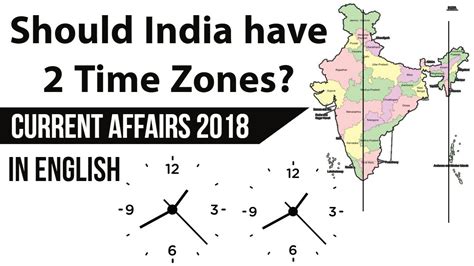
, which is often considered the lifeline of India. With millions of passengers and tons of cargo moving daily across thousands of kilometers, a unified time system is absolutely critical to prevent scheduling conflicts, delays, and safety hazards. Similarly, a single time zone streamlines communication across the nation, making it easier for businesses in Maharashtra to coordinate with partners in the North, South, or East without constant time zone calculations. This is especially vital for national broadcasting, telecommunications, and government services, ensuring that everyone starts their day, tunes into the news, or applies for services at a consistent national time. From an economic perspective, this single time zone strategy significantly reduces transactional friction. Businesses operating in Maharashtra, whether they are in manufacturing, IT, or services, can plan national meetings, deliveries, and supply chain logistics with a clear, unambiguous timeline. It fosters a sense of national rhythm, where the entire country, including the diverse populace of Maharashtra, begins and ends its workday on a relatively similar schedule, which, in turn, enhances national cohesion. While there have been debates over the years about introducing a second time zone for the eastern parts of India to optimize daylight utilization, especially in regions that experience very early sunrises, the administrative complexities and the potential for disrupting the established national rhythm have always led authorities to stick with the current system. For Maharashtra, this means that while people in its eastern districts might experience an earlier sunrise relative to the working day, and those in the west a slightly later one, everyone operates on the same
Maharashtra India time zone
clock, ensuring seamless integration into the broader national framework. This steadfast commitment to a singular
India Standard Time
reinforces the idea of
