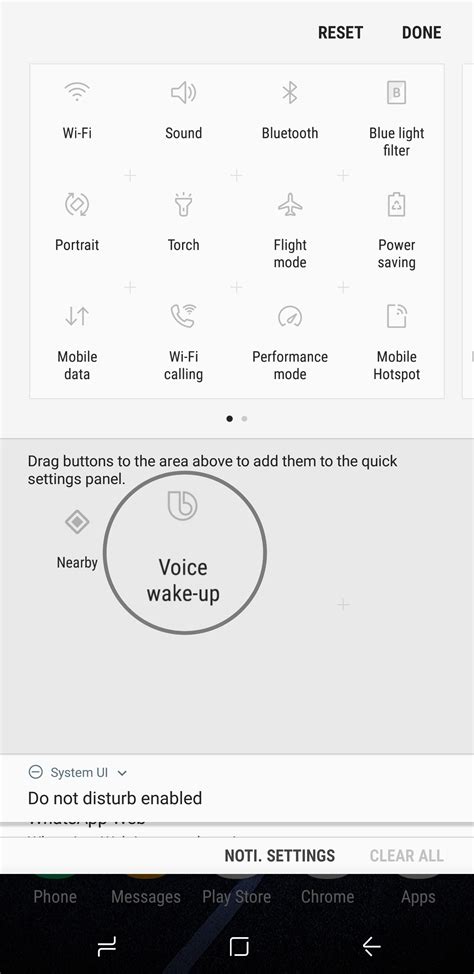
Disable Bixby Voice Wake Up: Quick & Easy StepsReally, guys, are you tired of Bixby popping up out of nowhere, interrupting your music, or trying to help when you didn’t even call its name? You’re not alone! Many Samsung users find the
Bixby Voice Wake Up
feature to be more of a nuisance than a helper. It’s like having a super eager assistant who just can’t wait to jump into action, even when you’re just whispering to your friend or talking to your pet. If you’ve ever found yourself thinking, “Ugh, Bixby, I didn’t say anything!” then this guide is for you. We’re going to dive deep into
how to turn off Bixby Voice Wake Up
so you can reclaim control over your Samsung device and enjoy a more peaceful, interruption-free experience.This isn’t just about silencing an annoying voice; it’s about optimizing your phone’s performance, saving battery life, and ensuring your privacy. Believe it or not, an always-listening assistant, even if it’s supposed to be dormant, can drain your battery faster and potentially pick up snippets of conversation you’d rather keep private. So, whether you’re a long-time Samsung user or just got a new device, learning to
disable Bixby Voice Wake Up
is a crucial step in personalizing your mobile experience. We’ll walk you through the settings, show you exactly where to tap, and even cover some troubleshooting tips to make sure Bixby stays quiet until you explicitly ask for it. Get ready to bid farewell to those unexpected Bixby appearances and say hello to a more predictable, user-friendly smartphone experience. It’s time to put
you
back in charge, not your digital assistant! Let’s get started and free your device from the tyranny of unsolicited voice commands. This comprehensive guide will ensure you know precisely
how to turn off Bixby Voice Wake Up
across various scenarios and settings within your Samsung smartphone. We’ll make sure you understand the ‘why’ behind disabling it, as well as the ‘how’, giving you all the tools to manage your digital assistant effectively. No more accidental activations or surprising interruptions, just pure, unadulterated phone usage tailored to your preferences. Seriously, it’s easier than you think to take back control, and we’re here to guide you every step of the way, ensuring that the process of turning off this sometimes overzealous feature is as smooth and straightforward as possible. So, buckle up, because by the end of this article, you’ll be a master of managing Bixby’s wake-up commands.### Understanding Bixby Voice Wake Up: What It Is and Why You Might Disable ItAlright, let’s talk about
Bixby Voice Wake Up
. What exactly is this feature, and why do so many folks, myself included, often look for ways to turn it off? Simply put, Bixby Voice Wake Up is Samsung’s way of allowing you to activate its digital assistant, Bixby, just by saying a specific command, typically “Hi Bixby.” Your phone is constantly listening for this phrase, even when the screen is off, so that it’s ready to spring into action the moment you call its name. This might sound super convenient on paper – hands-free operation, quick access to information, setting alarms without touching your phone – but in practice, it can often lead to some frustrating scenarios.The primary goal of Bixby, like other voice assistants, is to make your life easier by automating tasks and providing information through voice commands. However, the
voice wake up
part is where things often go sideways for many users. Imagine you’re watching a movie, or chatting with a friend, and someone on screen or in your conversation says something that sounds remotely like “Hi Bixby.”
Boom!
Bixby pops up, interrupting whatever you’re doing, usually with a polite but unwanted “How can I help you?” It’s like having a conversation with a toddler who keeps interjecting. This accidental activation is probably the biggest reason why people want to
disable Bixby Voice Wake Up
. It breaks your flow, drains your attention, and frankly, can be quite annoying.Beyond the accidental activations, there are a few other compelling reasons why you might want to adjust these settings. First up,
battery life
. Any feature that keeps your microphone constantly listening, even passively, is going to use up some power. While modern smartphones are incredibly efficient, every little bit counts, and if you’re trying to squeeze every last minute out of your battery,
turning off Bixby Voice Wake Up
can definitely help. It’s not going to double your battery life, but it can contribute to better overall endurance throughout the day.Then there’s the big one:
privacy concerns
. The idea of your phone constantly listening, even if it’s just for a specific phrase, makes some people uneasy. While reputable companies like Samsung have robust privacy policies and assure users that these recordings aren’t used for anything nefarious or stored indefinitely, the mere
potential
for constant listening can be a deal-breaker for privacy-conscious individuals. Knowing that your device isn’t always paying attention can provide a significant sense of relief and control over your personal space.Moreover, some users simply
prefer other voice assistants
. Perhaps you’re deeply integrated into the Google ecosystem and prefer using Google Assistant, or maybe you just don’t find Bixby’s features particularly useful compared to what other assistants offer. In such cases, having Bixby constantly vying for your attention becomes redundant and unnecessary. If you primarily use your phone for touch-based interactions or prefer a manual button press to activate an assistant, then having Bixby automatically respond to your voice is just extra noise in your digital life. Understanding these points makes the desire to
turn off Bixby Voice Wake Up
not just a preference, but often a practical decision for a smoother, more private, and battery-efficient smartphone experience. It’s about tailoring your device to
your
needs, not letting default settings dictate how you interact with your tech. This customization is a powerful aspect of modern smartphones, and knowing how to adjust these core functions is key to truly owning your device experience. The aim here is to empower you to make informed decisions about your phone’s features, ensuring that it works for you, rather than against you, especially when it comes to a feature as pervasive as voice wake-up.### The Step-by-Step Guide: How to Turn Off Bixby Voice Wake Up on Your Samsung DeviceAlright, guys, this is the main event! You’re here because you want to know
exactly
how to turn off Bixby Voice Wake Up
on your Samsung phone. Don’t sweat it; the process is pretty straightforward, but it can be tucked away in a few different menus. We’re going to break it down into easy-to-follow steps, covering the most common methods. So, grab your Samsung device, and let’s get Bixby to chill out a bit! The goal is to make sure your phone only responds to Bixby when
you
want it to, not when it thinks it heard something. This means going into the core settings of Bixby itself and tweaking a few crucial options. We’ll walk through these methods sequentially, starting with the most direct approach through the Bixby app. Keep in mind that while the steps are generally similar across various Samsung models and Android versions, there might be slight variations in menu names or icon placements. However, the core logic remains the same, making it easy for you to adapt. We’re aiming for a comprehensive guide here, ensuring no stone is left unturned in your quest for Bixby silence. Getting familiar with these settings also empowers you to explore other customization options Bixby offers, should you ever decide to re-engage with it differently in the future.### Method 1: Disabling Bixby Voice Wake Up Through Bixby SettingsThis is typically the most direct and effective way to get Bixby to stop listening for its wake-up command. Follow these steps carefully to
turn off Bixby Voice Wake Up
right from the source.First things first, you need to open the Bixby application itself. There are a couple of ways to do this. You can either swipe right on your home screen (if Bixby Home is enabled), or simply open your app drawer and look for the ‘Bixby’ app icon. It usually looks like a blue or purple circle with a stylized ‘B’ or ‘Bixby’ written on it. If you have a dedicated Bixby button on the side of your phone, you can also press it to launch Bixby, but be careful not to hold it too long, as that might trigger Bixby Voice instead of just opening the app. Once you’re in the Bixby main interface, you’ll need to look for the settings menu. This is typically represented by a gear icon (⚙️) or three vertical dots (⋮) in the top-right corner of the screen. Tap on this icon to reveal a dropdown menu. From this menu, select ‘Settings’. This is where all the magic happens for customizing Bixby’s behavior.Now you’re in Bixby’s settings. There will be a whole host of options related to voice, notifications, and general usage. What we’re specifically looking for is the ‘Voice wake-up’ option. It’s usually pretty prominent under a ‘Voice’ or ‘General’ section. Tap on ‘Voice wake-up’. Inside this menu, you’ll likely see a toggle switch next to “Wake with ‘Hi Bixby’.” This is your target, folks! This is the toggle that controls whether your phone is constantly listening for the wake-up command. Simply tap on this toggle to switch it to the ‘Off’ position. It should turn gray or change color to indicate it’s disabled. Sometimes, there might be additional options within ‘Voice wake-up’ like ‘Wake-up sensitivity’. While turning off the main toggle usually suffices, you might want to explore these other options too if you want to fine-tune Bixby’s listening behavior (e.g., making it less sensitive even if the wake-up is on, which is not our goal here, but good to know for future reference).Once you’ve toggled off “Wake with ‘Hi Bixby’,” you’re pretty much done with this method. To be absolutely sure, you can exit the Bixby app and try saying “Hi Bixby” to your phone. If everything worked correctly, Bixby shouldn’t respond. You might see a brief notification or icon indicating that Bixby is still present on your phone, but it should no longer be actively listening for your voice to wake up from its slumber. This method ensures that the core functionality of hands-free activation is disabled, giving you back control over when Bixby decides to chime in. It’s a quick, effective way to reduce unwanted interruptions and conserve a bit of battery life. Remember, you can always go back into these settings and re-enable it if you change your mind later. The beauty of these digital assistants is the flexibility they offer, allowing you to customize your experience down to this granular level. So, take a moment to appreciate the newfound silence and enjoy your phone without those pesky, uncalled-for interruptions. This systematic approach guarantees that you’re directly addressing the source of the
Bixby Voice Wake Up
feature, putting you squarely in command of your device’s auditory responsiveness. Always double-check by trying to trigger Bixby verbally after making these changes to confirm the settings have been applied correctly, ensuring a truly quiet experience.### Method 2: Adjusting Bixby Button Settings (If Applicable)For those of you rocking older Samsung devices or specific models that still come with a dedicated Bixby button on the side, you might find that even after turning off the voice wake-up, a casual press of this physical button can still launch Bixby. This isn’t exactly a “voice wake up” issue, but it’s related to Bixby’s unexpected appearances, and it’s a common frustration that can be just as annoying as an unsolicited voice activation. So, let’s tackle
how to turn off Bixby Voice Wake Up
in a broader sense by also addressing this physical button. While newer Samsung phones often allow remapping the power button or don’t have a dedicated Bixby button at all, many older flagship devices, like the Galaxy S8 through S10 series, and some A-series phones, still feature it.The first step, similar to Method 1, is to open the Bixby application. You can do this by either tapping on the Bixby icon in your app drawer, swiping right on your home screen to access Bixby Home (if it’s set up), or even by pressing the Bixby button itself
once
to get to the main Bixby screen. Once you’re in the Bixby interface, you need to navigate to its settings. Look for the gear icon (⚙️) or three vertical dots (⋮) usually located in the top-right corner. Tap on it and then select ‘Settings’ from the menu that appears.Within the Bixby settings, you’ll want to find an option related to the Bixby key or Bixby button. It might be labeled something like ‘Bixby key’ or ‘Side key’ settings, depending on your device and Android version. Tap on this option. Here’s where you get to customize what a press of that physical button does.Typically, you’ll have a few choices: a single press, a double press, and a long press. For a long time, Samsung locked the single press to Bixby, making it impossible to remap. However, with software updates, they’ve become more flexible. You often have the option to set what a single press and a double press do. For our purpose of reducing accidental Bixby activations, you want to make sure that the single press
does not
activate Bixby. If you have the option, you can remap the single press to do nothing, open a different app, or even launch a Bixby Routine (though be careful not to set up a routine that immediately triggers Bixby Voice).A common and recommended approach is to set the ‘Double press’ to launch Bixby and assign the ‘Single press’ to ‘Open app’ and then select an application you use frequently, or even ‘Do nothing’ if that option is available. This way, a casual, accidental tap won’t bring Bixby to life. If your device only offers a ‘Single press’ option for Bixby, and you can’t remap it, your best bet is to simply avoid pressing that button unless you specifically intend to use Bixby.However, if your device does allow full remapping, take advantage of it! Many users choose to remap the single press to open their camera, a favorite messaging app, or even Google Assistant if they prefer that. The key here is to make sure that an unintentional press of this button doesn’t interrupt your workflow with an unwanted Bixby appearance. After making your selections, simply back out of the settings, and your changes should be saved automatically. Now, even if you accidentally brush against that Bixby button, it won’t instantly spring Bixby to life, giving you further control over your device’s responsiveness. This is a crucial step in truly
turning off Bixby Voice Wake Up
by limiting its other activation methods, ensuring a comprehensive strategy against unwanted interruptions. Understanding and utilizing these physical button settings provides an additional layer of control, making your Samsung phone truly yours and minimizing those frustrating, unexpected Bixby encounters. It’s all about creating an environment where your phone responds exactly as you anticipate, eliminating any digital surprises.### Method 3: Managing Bixby Routines and Other Advanced SettingsSometimes, even after adjusting the main voice wake-up and button settings, Bixby might still feel a bit too omnipresent. This can often be due to Bixby Routines or other interconnected settings that subtly keep Bixby more active than you’d like. This advanced step is for those who want to ensure Bixby is truly dormant until explicitly called upon. Our goal here is to make sure we truly
turn off Bixby Voice Wake Up
in its entirety, leaving no stone unturned in our quest for a quiet phone.Bixby Routines are an incredibly powerful feature on Samsung devices, allowing you to automate tasks based on certain conditions (e.g., when you arrive home, open a specific app, or plug in headphones). While super useful, sometimes a routine you set up previously might inadvertently activate Bixby or a Bixby-related function, creating confusion about why Bixby is still popping up.To check and manage Bixby Routines:1.
Open Settings
: Go to your phone’s main ‘Settings’ app.2.
Navigate to Advanced Features
: Scroll down and tap on ‘Advanced features’.3.
Find Bixby Routines
: Look for and tap on ‘Bixby Routines’.4.
Review Your Routines
: Here, you’ll see a list of all your active and disabled routines. Carefully review each one. Look for any routine that might involve Bixby, especially those that trigger a Bixby command or open the Bixby app. For instance, if you have a routine that says “When I open Spotify, turn on Bixby Voice,” that could be the culprit. If you find such a routine, you have two options: you can either delete the routine entirely by tapping on it and selecting ‘Delete’, or you can edit it to remove the Bixby-related action. Often, simply toggling off the routine will suffice if you’re not sure you want to delete it permanently.This level of scrutiny ensures that no automated processes are secretly bringing Bixby to life.Beyond routines, there are other ‘Advanced Bixby settings’ you might want to consider, especially if you want to further reduce Bixby’s presence. In the main Bixby settings (which you accessed in Method 1), scroll through to see if there are options related to ‘Notifications’ from Bixby or ‘Using Bixby without unlocking’. While turning off voice wake-up handles the primary issue, preventing Bixby from delivering notifications or being accessible on the lock screen can enhance your sense of control. For ‘Notifications’, you can generally adjust these via your phone’s main ‘App notifications’ settings, finding Bixby and either turning off all notifications or customizing them to be less intrusive. For ‘Using Bixby without unlocking’, this option usually allows Bixby to perform tasks even when your phone is locked. Disabling this adds an extra layer of privacy and prevents Bixby from responding to commands that might be accidentally triggered while your phone is locked in your pocket or bag.Lastly, for a truly minimalist approach, you might consider
disabling the Bixby app itself
if your phone allows it. While many core Samsung apps cannot be fully uninstalled, some can be disabled. To check:1.
Open Settings
: Go to your phone’s main ‘Settings’ app.2.
Navigate to Apps
: Tap on ‘Apps’ or ‘Applications’.3.
Find Bixby
: Scroll through the list and find ‘Bixby Voice’ or ‘Bixby’.4.
Disable/Force Stop
: Tap on the app. If a ‘Disable’ button is present and active, you can tap it. If not, ‘Force Stop’ can temporarily halt its processes, but it will likely restart. Remember, disabling the Bixby app might affect other Samsung features that rely on it, so proceed with caution. The primary goal here is to ensure that you have complete mastery over
how to turn off Bixby Voice Wake Up
, and these advanced steps provide that comprehensive control. It’s about creating an environment where Bixby is truly a tool
you
activate, rather than an ever-present, sometimes intrusive, assistant. This detailed exploration of routines and other settings ensures that Bixby remains quiet until it’s explicitly called upon, providing a truly tailored and uninterrupted user experience.### Troubleshooting Common Issues After Disabling Bixby Voice Wake UpOkay, so you’ve diligently followed the steps to
turn off Bixby Voice Wake Up
, but Bixby is
still
popping up unexpectedly. Don’t throw your phone across the room just yet, guys! This can be incredibly frustrating, but there are a few common reasons why Bixby might still be making an appearance, and thankfully, there are usually simple fixes. Let’s troubleshoot these scenarios to ensure Bixby stays quiet until you want it to speak.One of the most frequent reasons Bixby might seem to ignore your settings is due to
multiple Bixby-related apps or services
. Sometimes, the general ‘Bixby’ app isn’t the only one; there might be ‘Bixby Voice’, ‘Bixby Vision’, or ‘Bixby Routines’ listed separately in your app drawer or settings. Ensure you’ve specifically targeted the settings for ‘Bixby Voice’ or the main ‘Bixby’ app where the voice wake-up toggle resides. Go back to Method 1 and double-check that the “Wake with ‘Hi Bixby’” toggle is indeed off in the correct Bixby application’s settings. A quick reboot of your phone after changing settings can also sometimes help ensure all processes are refreshed and the new settings are fully applied.Another sneaky culprit can be
Bixby Routines
that you might have forgotten about, or that were pre-set on your device. As discussed in Method 3, Bixby Routines can trigger Bixby under specific conditions – like when you open a certain app, connect to Wi-Fi, or plug in headphones. Even if you’ve turned off voice wake-up, a routine could still be telling Bixby to activate. Head back into ‘Settings’ > ‘Advanced features’ > ‘Bixby Routines’ and meticulously review each active routine. Look for any action that says “Start Bixby” or similar, and either disable the routine or remove that specific action. This is a crucial step if Bixby seems to activate at predictable times or when you perform certain actions.What about
accidental button presses
? If your device has a dedicated Bixby button (or if you’ve remapped your power button to Bixby), you might be accidentally pressing it without realizing. This isn’t Bixby
voice
wake-up, but it achieves the same annoying result. Go back to Method 2 and review your ‘Bixby key’ or ‘Side key’ settings. Make sure that a single press (or whatever action you’re most likely to accidentally perform) is
not
set to launch Bixby. Remap it to a different app or even to ‘Do nothing’ if that option is available. This can significantly reduce those surprise Bixby appearances.Finally, a less common but still possible issue could be
software glitches or outdated Bixby apps
. Make sure both your phone’s operating system and your Bixby apps are fully updated. Go to ‘Settings’ > ‘Software update’ to check for system updates. For Bixby app updates, open the Galaxy Store app, tap on the menu (three lines), and select ‘Updates’. Update any Bixby-related apps you find there. Sometimes, a bug in an older version of the app might prevent settings from sticking properly. If all else fails, and Bixby is still misbehaving, you might consider clearing the cache and data for the Bixby app (Settings > Apps > Bixby Voice > Storage > Clear cache, then Clear data). Be aware that clearing data will reset Bixby to its default state, meaning you’ll have to set it up again if you decide to use it in the future, but it’s a powerful way to eliminate any corrupted settings. By systematically going through these troubleshooting steps, you should be able to pinpoint why Bixby is still interrupting you and finally achieve the silence you desire. Ensuring you know
how to turn off Bixby Voice Wake Up
effectively means addressing all potential activation points, not just the primary voice command. This comprehensive approach will lead to a more predictable and enjoyable smartphone experience, free from unexpected digital interventions. Remember, patience is key, and by methodically checking each potential cause, you’ll eventually silence that overzealous assistant.### The Bigger Picture: Should You Disable Bixby Entirely?So, we’ve gone through the ins and outs of
how to turn off Bixby Voice Wake Up
, making sure that pesky assistant doesn’t butt into your conversations uninvited. But this raises a bigger question: should you go a step further and disable Bixby entirely? It’s a valid query, guys, and the answer really depends on your personal usage habits and preferences. There are definite pros and cons to a complete Bixby purge versus just silencing its wake-up command, and it’s worth taking a moment to consider the implications before making a final decision.Let’s first look at the arguments for a
complete Bixby disablement
. If you find Bixby absolutely useless, never use its features (like Bixby Vision, Bixby Routines, or even basic voice commands via a button press), and exclusively rely on other assistants like Google Assistant, then completely disabling it makes a lot of sense. By getting rid of its background processes, you might potentially free up more RAM, reduce background data usage, and eke out a tiny bit more battery life. It’s a minimalist approach – if you don’t use it, why have it taking up resources? For power users who want absolute control and don’t want any superfluous apps running, disabling Bixby entirely can contribute to a leaner, meaner phone experience. Furthermore, some users might have lingering privacy concerns, and fully disabling the assistant, even beyond just its wake-up, can offer greater peace of mind knowing that none of its components are active in any capacity. This includes preventing accidental launches from physical buttons, or any automated actions from Bixby Routines that you might have missed or that are system-mandated. It’s about achieving absolute silence and an absolute lack of Bixby presence on your device.On the flip side, there are reasons
not
to disable Bixby entirely, even if you’ve effectively silenced its voice wake-up. While you might not use Bixby for voice commands, some of its integrated features can actually be quite useful. For instance,
Bixby Routines
(as we briefly touched upon) are incredibly powerful for automating tasks based on your habits or location. You can set your phone to automatically silence itself when you arrive at work, turn on Wi-Fi when you get home, or launch your music app when you plug in headphones. These routines don’t necessarily require Bixby Voice to be active and can significantly enhance your phone’s smart capabilities. Similarly,
Bixby Vision
can be handy for identifying objects, translating text, or finding similar products online by simply pointing your camera. If you appreciate these unique Samsung-specific integrations, then a complete disablement might mean losing out on genuinely useful functionality.Moreover, Samsung continually updates Bixby with new features and improved functionality. While it might not be your go-to assistant now, it could evolve into something more valuable to your workflow in the future. Keeping it enabled, but simply turning off its intrusive wake-up command, allows you to retain these underlying capabilities without suffering the annoyance of unwanted activations. It’s a middle-ground approach: you eliminate the negative aspects while preserving the potential for positive ones.Another point to consider is the
integration with Samsung’s ecosystem
. Bixby is deeply interwoven with many aspects of Samsung devices and services. Completely disabling it might, in rare cases, lead to unexpected behavior or limit certain functionalities that rely on Bixby’s presence in the background. While unlikely for core phone functions, it’s a factor to ponder for those who use a full suite of Samsung products.Ultimately, the decision to just
turn off Bixby Voice Wake Up
or to disable Bixby entirely comes down to a cost-benefit analysis based on your personal usage. If you find no value in any of Bixby’s features and prefer a completely hands-off approach, then disabling it entirely might be the right move. However, if you appreciate the potential of Bixby Routines, Bixby Vision, or simply want to keep options open for future updates, then simply turning off the voice wake-up command provides a great balance. It allows you to maintain peace and quiet without completely abandoning a potentially useful suite of features unique to your Samsung device. Weigh your needs and make the choice that best enhances your daily smartphone experience.### ConclusionPhew! We’ve covered a lot, guys, from understanding what Bixby Voice Wake Up is, to detailed steps on
how to turn off Bixby Voice Wake Up
, tackling button settings, rooting out sneaky Bixby Routines, and even troubleshooting common hiccups. Our mission was to help you regain control over your Samsung device and ensure Bixby only pipes up when
you
want it to, not when it feels like it.The journey to silencing an overly enthusiastic digital assistant is all about knowing where to look and what settings to tweak. By carefully navigating through Bixby’s own settings, adjusting physical button behaviors, and inspecting those often-overlooked Bixby Routines, you can transform your phone from an interrupting chatterbox into a truly responsive and respectful companion. Remember, your smartphone is a personal tool, and its behavior should align with your preferences, not default settings that might not suit your lifestyle.Taking the time to
disable Bixby Voice Wake Up
isn’t just about avoiding frustration; it’s about optimizing your device for better battery life, enhancing your privacy, and creating a smoother, more personalized user experience. Whether you choose to keep Bixby for its other features or decide to minimize its presence entirely, mastering these controls empowers you to tailor your Samsung phone exactly to your needs. So, enjoy the newfound peace and quiet, and relish in the satisfaction of having full control over your digital world. You’ve successfully tamed Bixby, and that’s a win in our book!
