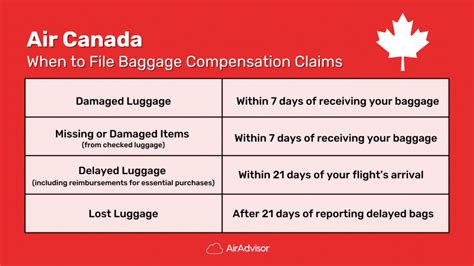
Air Canada Delayed Baggage: Claim Your Compensation!\n\n## Navigating the Frustration: Why Air Canada Delayed Baggage Happens and Why Compensation Matters\n\nHey there, fellow travelers! Ever landed at your dream destination, brimming with excitement, only to watch the baggage carousel spin endlessly,
sans
your beloved luggage? It’s a gut-wrenching feeling, isn’t it? That moment when you realize your
Air Canada delayed baggage
isn’t just a minor inconvenience, but a genuine problem, can really put a damper on your trip. Whether it’s your carefully packed outfits for a crucial business meeting, essential medications, or just your favorite comfy socks,
lost luggage
or
delayed baggage
can throw a huge wrench into your plans. But don’t despair, guys, because there’s a light at the end of this chaotic tunnel:
compensation claims
. Yes, you read that right! When your bags take an unexpected detour, Air Canada, like other airlines, has obligations, and you, as a passenger, have rights. Understanding these rights and knowing
how to claim compensation
is absolutely key to turning a stressful situation into a manageable one.\n\nThe reality is that
Air Canada delayed baggage
incidents, while frustrating, are a part of the complex world of air travel. With thousands of bags processed daily across vast networks, sometimes things go awry. Misloaded bags, tight connection times, technical glitches, or even human error can all contribute to your luggage not making it onto your flight. It’s not always malice; often, it’s just the sheer scale of operations. However, this doesn’t diminish the impact on
you
. Imagine arriving for a wedding without your suit, or heading to a beach resort without your swimwear. These aren’t just minor annoyances; they can lead to significant unplanned expenses and emotional distress. That’s why the concept of
Air Canada baggage compensation
is so vital. It’s designed to help alleviate these burdens, covering essential purchases you might need to make while you wait for your bags to catch up. Don’t think of it as “profiting” from a mishap; think of it as getting back what you’re rightfully owed for the disruption and expense caused by the airline’s failure to deliver your property on time. Many passengers don’t even realize they’re entitled to this, or they feel intimidated by the process, letting valuable
compensation claims
slip through their fingers. Our goal here, guys, is to empower you with the knowledge and confidence to pursue what’s yours when your
Air Canada delayed baggage
situation arises. We’ll walk you through everything, from understanding your rights to successfully filing that claim, ensuring you’re well-equipped for whatever comes your way.
It’s your money, your inconvenience, and your right to seek remedy.
\n\n## Understanding Your Rights: Air Canada’s Policy on Delayed Baggage and the Montreal Convention\n\nAlright, let’s get down to the nitty-gritty, folks – what exactly are your rights when
Air Canada delayed baggage
turns your trip upside down? It’s crucial to understand that airline policies aren’t just arbitrary rules; they’re often governed by international treaties, the most significant of which is the
Montreal Convention
. This convention is a vital piece of international law that outlines the rights and responsibilities of passengers and airlines concerning international flights, and it’s particularly relevant when discussing
Air Canada delayed baggage policy
. For domestic flights within Canada, similar principles often apply under Canadian transportation regulations. Essentially, the Montreal Convention states that airlines are liable for damage caused by delay in the carriage of baggage, up to a certain financial limit. This isn’t just a friendly gesture from the airline; it’s a legal obligation. This means that if your checked luggage is delayed,
Air Canada is generally responsible
for compensating you for reasonable, verifiable expenses incurred as a direct result of that delay. It’s not just a suggestion; it’s the law of the land (or, well, the air!).\n\nSo, what does this actually mean for your
Air Canada delayed baggage compensation claim
? Firstly, the airline’s liability for
baggage delay
(and damage or loss) is capped. As of my last update, this limit under the Montreal Convention is approximately 1,288 Special Drawing Rights (SDRs), which translates to roughly CAD
\(2,300, although the exact amount fluctuates with currency exchange rates. This is the *maximum* amount an airline is liable for, not necessarily what you’ll automatically receive. Your **Air Canada delayed baggage compensation** will be based on your actual, documented expenses up to this limit. Secondly, it's important to differentiate between *delayed* and *lost* baggage. While both are covered, a bag is generally considered "lost" if it hasn't been returned to you within 21 days from the date it was supposed to arrive. Before that 21-day mark, it's considered delayed. Air Canada’s specific policy aligns with these international standards. They are expected to make every reasonable effort to return your bags promptly. Their internal guidelines often state they will compensate for reasonable, necessary expenses, like toiletries, essential clothing, and other immediate needs, while you wait for your bags. *It’s not an open chequebook*, but it’s definitely there to cover your urgent requirements. Always keep in mind that airlines, including Air Canada, aim to deliver your bags with your flight. When they don't, these policies kick in to protect *you*. Being familiar with these rules is your first step towards a successful **compensation claim for delayed baggage**. Don't let uncertainty stop you from asserting your rights, guys! Understanding these foundational elements empowers you to approach your claim with confidence.\n\n## Your Roadmap to Resolution: How to File an Air Canada Delayed Baggage Claim Successfully\n\nOkay, so your bag didn't show up. You've taken a deep breath, understood your rights, and now it's time to take action. Filing an **Air Canada delayed baggage claim** might seem daunting, but by following a clear, step-by-step process, you can significantly increase your chances of a successful outcome. The very first and *most critical step* you need to take is while you're still at the airport, before you even leave the baggage claim area. Locate the Air Canada baggage service office or a representative and report your missing bag *immediately*. This is where you’ll fill out a Property Irregularity Report (PIR). This document, often referred to as a **PIR report**, is the official record of your delayed baggage and is absolutely essential for any future **Air Canada delayed baggage compensation claim**. Without a PIR, proving your bag was indeed delayed can become much harder, so *do not skip this step*. Make sure you get a copy of your PIR, noting the file reference number, and keep it safe! This number will be your golden ticket for tracking your bag and referencing your claim.\n\nOnce you have your **PIR report** in hand, the next phase of your **Air Canada delayed baggage claim process** involves gathering all necessary documents. This includes your flight ticket or boarding pass, baggage tags (these are super important!), your PIR number, and any receipts for essential items you've had to purchase due to the delay. Remember, for your **Air Canada compensation claim**, you're generally entitled to be reimbursed for *reasonable and necessary expenses* incurred while your bag is delayed. Think toiletries, underwear, a basic change of clothes, or perhaps even a crucial item for a specific event like a business meeting or wedding. *Keep all original receipts!* Digital copies are good, but physical receipts are often preferred. Without these, your claim for reimbursement will likely be denied. You have a limited window to submit your claim for reimbursement for expenses, usually within 21 days of the bag being returned or declared lost, though it’s always best to submit as soon as possible. Air Canada typically allows you to file the formal reimbursement claim online through their website, which streamlines the **delayed baggage claim process**. You'll need to input your PIR number, flight details, and upload copies of your receipts.\n\nFinally, a bit of persistence can go a long way when dealing with an **Air Canada delayed baggage claim**. After submitting your online claim, make sure to follow up periodically. While airlines strive for quick resolutions, sometimes claims can take a bit longer. Keep a record of all communication, including dates, times, names of representatives you speak with, and any reference numbers. If your bag hasn’t been returned after 21 days, it’s officially considered lost, and the claims process will shift to that of **lost baggage compensation**. Don't be afraid to politely but firmly advocate for yourself. Remember, you're not asking for a favor; you're seeking what you are legally entitled to under the terms of your carriage and international regulations. *Being prepared, documented, and persistent* are your best allies here, ensuring your **Air Canada delayed baggage compensation** is processed as smoothly as possible.\n\n## What Can You Claim? Understanding Air Canada Compensation Limits and Reasonable Expenses\n\nNow that you know *how* to file, let's talk about the exciting part: *what exactly can you claim* when you're dealing with **Air Canada delayed baggage**? It’s important to manage expectations here, guys. While you are entitled to compensation, it’s not an unlimited shopping spree. The concept revolves around **reasonable expenses** and immediate needs. Air Canada, following the guidelines of the Montreal Convention, will generally reimburse you for items you *had to purchase* because your luggage was delayed. This typically includes essential toiletries (toothbrush, toothpaste, deodorant), a few changes of clothing (especially if you're delayed for multiple days), and any specific items crucial for your immediate travel purpose (e.g., formal wear for a wedding if you're attending one that day, or business attire for a conference). What’s considered "reasonable" can sometimes be subjective, but generally, it means necessities, not luxuries. *Don’t go out and buy a whole new designer wardrobe or expensive electronics*; these purchases are unlikely to be fully reimbursed, if at all. The goal is to get you by comfortably until your bag arrives, not to replace its entire contents.\n\nWhen it comes to **Air Canada compensation limits**, as we touched on earlier, the Montreal Convention sets a maximum liability of approximately 1,288 Special Drawing Rights (SDRs) per passenger, which converts to roughly CAD \)
2,300 (this figure can change based on exchange rates and convention updates). This limit applies to
all combined claims
related to your baggage – whether it’s delayed, damaged, or ultimately lost. It’s crucial to understand that you won’t automatically receive this maximum amount; your
Air Canada baggage compensation
will be based on the actual, documented value of your losses and necessary expenses, up to that cap. So, if your bag is delayed and you spend CAD
\(200 on essentials, that’s what you’ll claim, not the full CAD \)
2,300.
The golden rule here is to keep every single receipt.
Without receipts, proving your expenses becomes incredibly difficult, and Air Canada will likely deny those specific parts of your
delayed baggage claim
. Make a habit of asking for receipts for
everything
you buy, even small items. Take photos of them, too, as a backup!\n\nBeyond just covering essential purchases, some passengers might also inquire about compensation for the
inconvenience
or
emotional distress
caused by
Air Canada delayed baggage
. While the Montreal Convention does cover “damage caused by delay,” this is typically interpreted financially, meaning direct expenses. Compensation for pure inconvenience or emotional suffering is rarely awarded under these guidelines unless there’s a very specific, provable financial loss tied to it (e.g., missing a paid event due to not having required attire). The primary focus of
Air Canada compensation claims
for delayed baggage is to alleviate the financial burden of unexpected purchases. Therefore, focus your claim on those tangible, receipt-backed expenses. Remember, the airline is trying to reconcile your situation within established legal frameworks. By understanding these
Air Canada compensation limits
and focusing on
verifiable, reasonable expenses
, you’ll present a much stronger and more successful claim. Don’t leave money on the table, guys, but also don’t over-ask and jeopardize your legitimate claims!\n\n## Proactive Steps and Persistence: Tips for a Smooth Air Canada Baggage Claim Experience\n\nNavigating an
Air Canada delayed baggage claim
doesn’t have to be a nightmare, especially if you’re armed with a few smart strategies and a healthy dose of persistence. Our goal here, guys, is to ensure your experience is as
smooth
as possible, transforming a potentially infuriating situation into a manageable one where you get what you’re owed. One of the most important
Air Canada claim tips
is to be
proactive
from the get-go. As soon as you realize your bag isn’t on the carousel, don’t just stand there hoping; head straight to the Air Canada baggage desk. Filing that
PIR (Property Irregularity Report)
immediately
is non-negotiable. This official report is the foundation of your claim, so get it done, get a copy, and keep that reference number handy. This initial action sets the stage for everything that follows and is crucial for any
Air Canada delayed baggage compensation claim
.\n\nAnother vital tip for a
smooth baggage claim
is
documenting everything
. We really can’t stress this enough. Keep all your travel documents: boarding passes, baggage tags, flight confirmation emails. Take photos of anything relevant – the empty carousel, the baggage service office, even the items you’re buying (along with their receipts, of course!). When you submit your claim online, attach clear scans or photos of all these documents. For any communication with Air Canada, whether it’s by phone, email, or online chat,
always note down the date, time, name of the representative, and a summary of the conversation
. This paper trail, or digital trail, acts as your evidence should any disputes arise. If you have any unique items in your delayed bag that you need immediately (like medical devices or specific work tools), be sure to highlight this when you file the PIR. Sometimes, knowing the urgency can help speed up the search process.\n\nFinally, and perhaps most crucially,
know your rights and be persistent
. Don’t be shy about following up on your
Air Canada delayed baggage claim
. If you don’t hear back within a reasonable timeframe (which can vary, but generally a few days to a week for initial contact after submission), make that follow-up call or send an email. Be polite but firm. Refer to your PIR number and any previous correspondence. If you feel your claim isn’t being handled fairly or if you face a denial you believe is unjust, don’t just give up. You have options. You can escalate the issue within Air Canada’s customer service, and in some cases, you might even consider contacting external bodies like the Canadian Transportation Agency (CTA) for domestic flights or consumer protection agencies for international travel. They oversee passenger rights and can mediate disputes. Remember, the goal of
Air Canada delayed baggage compensation
is to make you whole again after an airline’s lapse. By staying organized, proactive, and persistent, you’ll navigate the process with much greater ease and increase your chances of a positive outcome.
Your time and peace of mind are valuable
, so don’t hesitate to stand up for them!\n\n## Final Thoughts: Taking Control of Your Air Canada Delayed Baggage Compensation\n\nSo there you have it, guys. Dealing with
Air Canada delayed baggage
can definitely be a headache, but it doesn’t have to ruin your entire trip or leave you out of pocket. We’ve walked through everything, from understanding your fundamental rights under the Montreal Convention to the practical, step-by-step guide on how to file an
Air Canada compensation claim
. Remember, the key takeaways are:
act immediately at the airport, document absolutely everything, and be persistent
. Knowing the
Air Canada compensation limits
and focusing on
reasonable, necessary expenses
will put you in the strongest position for a successful outcome. Don’t let the process intimidate you; you are entitled to redress for the inconvenience and financial burden caused by delayed luggage. Take control, gather your evidence, and calmly pursue your claim. Safe travels, and here’s hoping your bags always arrive with you!
